
 Posts
Posts


 |
| The Long Version! |
I was a Hip Hop baby. In the 4th grade, me and Sam The
Project Man, every morning, snuck out the side door, before gym, quick dashed to the corner store on 47th
& Ellis, buying candy, soda, and chips, reselling them at a 200 percent
mark up. The principal, had closed our campus
because our school fought with the Burnside boys, like armies. So we had a captive
market until 3:00pm and made some real change, until Sam slammed the door and the principle looked out the window and saw us dash out. We got suspended for a day, but we had a good run, while it lasted.
Once we pooled our
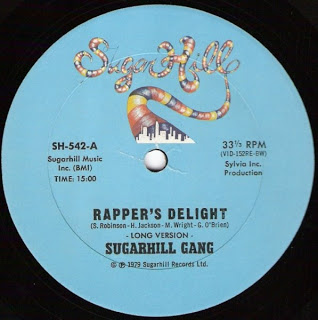
resources and brought Rappers Delight by The Sugar Hill Gang, learned the words,
and at the back of the bus, in front of the ladies, we blew them away. Finally, when the other boys caught up, we
made the bongo sounds “dout dout dout da dout dout dout da dout....” that was the intro to the recently released long
version of Rapper's Delight, that again only we had mastered.
“Rapper’s Delight” changed the game.
Then Kurtis Blow dropped “The Breaks”, Grand
Master Flash followed with “White Line”. And The Blast Master KRS-One (knowledge Reins Supreme Over Nearly Everyone) blew up the South Bronx, with "Stop the Violence" putting the
stamp on Hip Hop.

While Chicago was still stuck on House Music,
I followed Hip Hop east for college and
got myself into situation(s) where Hip Hop became my crutch. That’s all they
played out there, Kool Moe Dee, Run DMC, Eric B and Rakim, Public Enemy, Third Base, etc.

I came back to "The Chi" and for a moment
tried to forget those those situation(s) by reconnecting to 79th Street. It was easy to get New Jack City-ed back,
listening to Snoop and Dre talking about 187's, Easy E, with “Real Compton City G’s”,
and Ice Cub, “Steady Mobbing”. These were some of the many sound tracks of anger and confusing in my crack ravished neighborhood.

But it was just a phase that luckily I
didn’t get too far into it. I moved to Hyde Park for a year and hated it. But at least it was calm
and if I wanted trouble, I had to travel to it. And I remember Jimmy’s, every Sunday night.
They had jazz in the back room. Mostly Black men played, which was good for me
to see. It was cool how they carried their instruments like Treymond ( before they
shot him in the alley) carried his gat, proudly. There is also something about
watching a Black man gently lift his horn, like a child, out of a black case and step up onto the stage and take his place with others. But the music never caught hold of me besides for when I was at Jimmy’s.

But as I aged Hip Hop became a political liability, especially as it became more and more infected with commercial and materialism. When someone
asked what type of music I liked and I answered Hip Hop, they looked at me funny,
seeming to reevaluated me, downward. Then I'd burst into an explanation of
Hip Hop Culture verses rap music, but the explanation didn’t help, it just made me seem
unhinged as as if I were a child explaining the differences between toys.
When ever I argued why I love hip hop with my elders, they would give me a patronizing smile and say that Hip Hop was just a phase for me and one day I'd grow out of it, and into jazz
To mainstream America, Hip Hop was/is both the calling card of the " Urban Black Male, disgruntled, disconnected, angry and childlike. W.E.B Dubois's phrase "What does it mean to be a problem" easily translates to what does it mean to be an urban Black male.
 |
| gucci mane |
Occasionally, I run into younger white people who like Hip Hop, but mostly they
prefer "rap" it's deeply damaged offshoot which is the objectification of Hip Hop
culture and of Black people. They easily appropriate the worst of it, turning it into an expression
of their intellectual ability to find "irony", while enjoying a minstrel show as their elders did, only updated. Black people have
always provided comic relief and fodder for white superiority complexes.
But there is a breezeway between Jazz and
Hip Hop. Jazz, like blues, was the music of a wider generation of Black people. But they're all based upon the singularly unique expressions of both Black rebellion, and a
need to define and express the discord and chaos, the angsts and anger, the
suffering and toilings of a race created by European/American chattel slavery.
Gospel and Blues, then Jazz had to come
first, because during the height of white supremacy, simply looking at whites the wrong way, got Black
people killed. Words that expressed
anger or affirmed ones dignity were simply not tolerated in Black people.
Thelonious Monk Live in 66
It turns out that my elders were partially right. Recently I caught the Jazz bug. Last month, I came across the above video of Thelonious Monk. I was captivated at how he played the piano like a surgeon or more aptly, like the piano was his only mode of communications and he was using it to tell a long, profound, and emotional story. While he played, the camera profiled the rest of his body then focused on his shoe taping the floor as if capturing the discord that would be turned into beautiful art via his hands on the key board. The base player looks like a scholarly owl wearing glasses, using his long fingers to coax language communicating back out of the base. Then Thelonoius suddenly rises up. Like their harmony merged then forged into some ethereal boundary transforming into a cosmic twitch, releasing the energies of a bembé ( Vodou drumming ceremony) creating a doorway for Ogun or Shango to come into Thelonious' head, possessing him. He steps away from the piano, inches haltingly forward ( maybe it's old man Papa Legba in his head now) then he turns around and around. As if he's in the dark following the trail of the music, jerking his elbow back and forth, his other hand at his side swinging like a pendulum, while snapping his fingers. He sits back down and picks up where he left off. I was hooked at that moment.
 |
| Monk by Irina March |
Maybe Thelonius is now a jazz Houngan and I a newly initiated Hounsi, and the time was right for me. As my house is older now and is finally starting to settle and the ghosts inside are showing themselves as I grow more contemplative. Jazz is a lot more conducive to ghosts as it's more of a continuous flow as opposed to Hip Hop's bursts of lyrical stories. Jazz also is more reflective because while it's all about messages, there are no words in it's most pure form, it's left for the listener to translate. And as I forge forward on, I need this conduit as well as Hip Hop. I am Thankful that although I will always be A Hip Hop baby, I'm finally a Jazz man.
Hotep
Invisible


