Showing posts with label Shango. Show all posts

Friday, November 23, 2012

Jazz Comes Home to a Hip Hop Baby


The Long Version!


I was a Hip Hop baby.  In the 4th grade, me and Sam The Project Man, every morning, snuck out the side door, before gym, quick dashed to the corner store on 47th & Ellis, buying candy, soda, and chips, reselling them at a 200 percent mark up. The principal, had closed our campus because our school fought with the Burnside boys, like armies. So we had a captive market until 3:00pm and made some real change, until Sam slammed the door and the principle looked out the window and saw us dash out. We got suspended for a day, but we had a good run, while it lasted. 

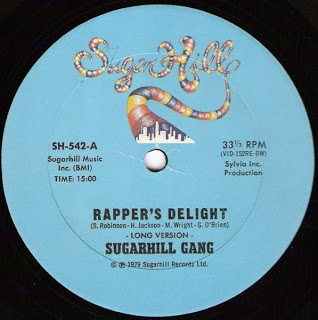
Once we pooled our resources and brought Rappers Delight by The Sugar Hill Gang, learned the words, and at the back of the bus, in front of the ladies, we blew them away. Finally, when the other boys caught up, we made the bongo sounds “dout dout dout da dout dout dout da dout....”  that was the intro to the recently released long version of Rapper's Delight, that again only we had mastered.

“Rapper’s Delight” changed the game.

Then Kurtis Blow dropped “The Breaks”, Grand Master Flash followed with “White Line”. And The Blast Master KRS-One (knowledge Reins Supreme Over Nearly Everyone) blew up the South Bronx, with "Stop the Violence"  putting the stamp on Hip Hop.


While Chicago was still stuck on House Music,
I followed Hip Hop east for college and got myself into situation(s) where Hip Hop became my crutch. That’s all they played out there,  Kool Moe Dee, Run DMC, Eric B and Rakim, Public Enemy, Third Base, etc.


I came back to "The Chi" and for a moment tried to forget those those situation(s)  by reconnecting to 79th Street. It was easy to get New Jack City-ed back, listening to Snoop and Dre talking about 187's, Easy E, with “Real Compton City G’s”, and Ice Cub, “Steady Mobbing”. These were some of the many sound tracks of anger and confusing in my crack ravished neighborhood.


But it was just a phase that luckily I didn’t get too far into it. I moved to Hyde Park for a year and hated it. But at least it was calm and if I wanted trouble, I had to travel to it. And I remember Jimmy’s, every Sunday night. They had jazz in the back room. Mostly Black men played, which was good for me to see. It was cool how they carried their instruments like Treymond ( before they shot him in the alley) carried his gat, proudly. There is also something about watching a Black man gently lift his horn, like a child, out of a black case and step up onto the stage and take his place with others. But the music never caught hold of me besides for when I was at Jimmy’s.  


But as I aged Hip Hop became a political liability, especially as it became more and more infected with commercial and materialism. When someone asked what type of music I liked and I answered Hip Hop, they looked at me funny, seeming to reevaluated me, downward. Then I'd burst into an explanation of Hip Hop Culture verses rap music, but the explanation didn’t help, it just made me seem unhinged as as if I were a child explaining the differences between toys. 

When ever I argued why I love hip hop with my elders, they would give me a patronizing smile and say that Hip Hop was just a phase for me and one day I'd grow out of it, and into jazz

To mainstream America, Hip Hop was/is both the calling card of the " Urban Black Male, disgruntled, disconnected, angry and childlike. W.E.B Dubois's phrase  "What does it mean to be a problem" easily translates to what does it mean to be an urban Black male.  

gucci mane

Occasionally, I run into younger white people who like Hip Hop, but mostly they prefer "rap" it's deeply damaged offshoot which is the objectification of Hip Hop culture and of Black people. They easily appropriate the worst of it, turning it into an expression of their intellectual ability to find "irony", while enjoying a minstrel show as their elders did, only updated. Black people have always provided comic relief and fodder for white superiority complexes.


But there is a breezeway between Jazz and Hip Hop. Jazz, like blues, was the music of a wider generation of Black people. But they're all based upon the singularly unique expressions of both Black rebellion, and a need to define and express the discord and chaos, the angsts and anger, the suffering and toilings of a race created by European/American chattel slavery.

Gospel and Blues, then Jazz had to come first, because during the height of white supremacy, simply looking at whites the wrong way, got Black people killed. Words that expressed anger or affirmed ones dignity were simply not tolerated in Black people.


                                                  Thelonious Monk Live in 66

It turns out that my elders were partially right. Recently I caught the Jazz bug. Last month, I came across the above video of Thelonious Monk. I was captivated at how he played the piano like a surgeon or more aptly, like the piano was his only mode of communications and he was using it to tell a long, profound, and emotional story. While he played, the camera profiled the rest of his body then focused on his shoe taping the floor as if capturing the discord that would be turned into beautiful art via his hands on the key board. The base player looks like a scholarly owl wearing glasses, using his long fingers to coax language communicating back out of the base.  Then Thelonoius suddenly rises up. Like their harmony merged then forged into some ethereal boundary transforming into a cosmic twitch, releasing the energies of a bembé ( Vodou drumming ceremony) creating a doorway for Ogun or Shango to come into Thelonious' head, possessing him. He steps away from the piano, inches haltingly forward ( maybe it's old man Papa Legba in his head now) then he turns around and around. As if he's in the dark following the trail of the music, jerking his elbow back and forth, his other hand at his side swinging like a pendulum, while snapping his fingers. He sits back down and picks up where he left off. I was hooked at that moment.


Monk by Irina March

Maybe Thelonius is now a jazz Houngan and I a newly initiated Hounsi, and the time was right for me. As my house is older now and is finally starting to settle and the ghosts inside are showing themselves as I grow more contemplative. Jazz is a lot more conducive to ghosts as it's more of a continuous flow as opposed to Hip Hop's bursts of lyrical stories. Jazz also is more reflective because while it's all about messages, there are no words in it's most pure form, it's left for the listener to translate. And as I forge forward on,  I need this conduit as well as Hip Hop. I am Thankful that although I will always be A Hip Hop baby, I'm finally a Jazz man.

Hotep

Invisible   


Wednesday, October 10, 2012

Hugo Chávez Continues The Latin American Revolution! & The Monday Red Beans & Rice Tradition


Francisco Toro wrote an Op-ed centered prominently in The New York Times, entitled "How Hugo Chávez  Became Irrelevant". There's no need for me to go deep into it, as Red Beans & Rice demands far more attention.  But the "cheap-seats recap" is that Toro "doth" proclaimed progressive radicalism as bad and out dated,-along with Fidel Castro-, while political "moderation" is  Godly. And, that Venezuelan voters would overwhelmingly reject Hugo.  Well, Nope! The results are in and Hugo (got to love a progressive-world-change-agent name Hugo) overwhelmed his challenger, Henrique Capriles Radonski, in a clean and fair democratic election. Given what went down with Gore/Bush and w the current attempts to erase Black votes in the up coming Presidential elections, America could learn a thing of two from Hugo.

Overlooking throngs of cheering supporters both old and young, Hugo Chávez said "Venezuela will continue along the path of democratic and [ Simon] Bolivarian socialism of the 21st century." 
                                       
                          Red Beans & Rice, A Tradition. 


Historically, Black folk have existed between superstition, that gave us both a desperately needed crutch and a semblance of control-when in fact we had none; and a white supremacist Hell created on earth for Black people. 


 This is why during slavery, the African tradition of jumping over a broom stick, morphed from both a traditional African marriage ceremony and a way to determine who would run the household, to  a Black marriage ceremony in America, evoking a powerful forces to keep the married couple from being torn apart and sold off, which was a common occurrence. 


Four years ago, in Annapolis Maryland during a road construction project, a bundle of "magic" was found in a tattered and mostly disintegrated leather pouch, roped around the top.  Inside was lead shot, nails, pins,- some of them purposely bent, and a stone with a tiny ax on top, which represents the Yorùbá Orisha, Shango. The bag and its contents date back to the early 1700's and records place the find at what was then a crossroads.  

Eshu Legba
Crossroads have special significants in the Yorùbá spiritual world and are guarded by the Orisha, Eshu Legba, who at the cross roads takes the form of an old man with a humped back. Eshu Legba is the messenger between the world of humans and the realm of the Orisha. Clearly some in slaved African/ Black person,  needed to evoke some form of protection arising from the Yorùbá religious tradition, passed down to them.

The Great Migration Series by Jacon Lawrence 

The problem with the Northern urbanization- The Great Migration  of Black people from the South to the North from 1910-1930, is that we've left numerous traditions behind that rooted us to the land and to our people as a race.  The only tradition we now share is the Black church, which I personally cannot honor.  I can appreciate the progressive actions of a church, and a few  individual churches as single institutions, like Saint Sabina on Chicago's South side. But not enough to honor the Black church as a tradition, at least not any more.

I'm therefore learning to create my own traditions based upon my family history and the history of my people.

My first tradition will be to cook Red Beans & Rice, every Monday that I'm at home. Beans were big in my family on the Mississippi, and the Louisiana side- that I'm just now learning about. But only my Aunt Murk cooked Red Beans & Rice.

I've cooked them before, but never as good as last Monday. Cooking Red Beans & Rice is a New Orleans Black tradition. Many Creoles would strongly object to being called Black, but as "Creoles" exist only in New Orleans, in any other place in America they would be Black.  I therefore think it's fair to call the kettle what it is.  The Red Beans & Rice tradition demands some form of ham which was always served on Sundays and the left overs went into Monday's Red Beans & Rice.  Monday was also wash day, which in those days was a laborious process consuming most of the day, so letting the red beans soak and then cook, while washing  was an efficient use of time for the day.


Red Beans & Rice appears to be an easy dish, but it's complicated as I've found out. In order to honor the tradition, you must take it seriously.  So I researched the dish thoroughly finding numerous sites on the internet, many of which were not about red beans but other staples of Louisiana that in turn, provided me more insight into Red Beans & Rice. For instance, Gumbo which was already a tradition passed down to me by my Aunt Murk. What I learned was that she taught me how to cook the "democratic" Cajun version of Gumbo, with a tomato base that she combined with okra ( the African word for gumbo), sea food, chicken, and sausage, which is acceptable, along with any other salvageable left-overs in the refrigerator. This is how I prepare it today.  I further learned that what's generally available in New Orleans is the aristocratic Creole form of Gumbo, that uses only okra and has strict rules of what can go into it,( Seafood) and in what season it can be cooked, fall and winter.  I also was put on the right track for Red Beans & Rice.  I learned that red beans were a traditional meal in African and were brought over to to the Americas with the kidnapped Africans who spoke the Bantu languages and inhabited large stretches of the Mozambique Channel coastline from northern Kenya to northern Mozambique, and the Comoros Islands.  Many of these captured Africans were first brought to Haiti where red beans were introduced there first. The African word for red bean is Maharagwe.

I then had the history down. But the proper preparation remained elusive, as they're so many sources on the internet.  Even "Meagan from Iowa" was a self proclaimed  "expert" and used tomato past and spam, so I had to be wary of whom to trust, which takes a lot of time to figure out on the internet.

 I had a decent cook book that I purchased years ago from the outdoor French Market in the NOLA French Quarter, called "Louisiana Lagniappe".  But the problem with this book is it also has a lot of  non NOLA southern dishes like Tennessee Chicken N' Dumplings and worse, straight up red neck stuff, like Sweet and Sour Chicken Wings with soy sauce fried rice, Mini Rolls Stroganoff, and Chicken Lu-Lu.  No Thank you.


Then I discovered the grand and majestic Picayune Creole Cook Book. I'd heard about this book before and wrote it off as "touristy" because the ones I'd seen on the internet were the latest editions, glossy and in soft cover.  The Times Picayune had stopped printing them in 1989. But a few weeks ago, I came across and older 1954, 10th edition copy in great condition for relatively cheap.  There are twenty editions total, starting with the 1915 one.

This book is a corner stone of Louisiana tradition and not just because it has four hundred recipes including four for Red Beans Rice, including my favorites, Red Beans Burgundy Style and Bacon and Beans a la Creole. This book also has recipes for numerous crawfish dishes, lamb, rabbit, squirrel, duck and venison. And, I've discovered a place on the westside of Chicago "Moo and Oink" that has all of those ingredients. My freezer is now stocked with four rabbits as they're now in season. Soon will be venison, and then squirrel season, which was a favorite of Aunt Murk's.


 The Picayune Creole Cook Book's introduction reads like a history of the people, homes, cultural clashes, traditions, lies, and politics, that combined to make NOLA restaurant dining the experience that it is today. This book focuses on Creole as opposed to Cajun, yet Africa is "politely" left out when explaining the culture of the food. However, a certain honesty does lend the writer ( there are no author's name attached) to say in the introduction, all the earlier books have different intros., 

"these are the old, old recipes which your mother used, and her mother, and her grand mother, and her grand mother, who caught it from the old-time Mammy who could work all kinds of magic in the black raftered kitchen of long ego." 

As this book was written in 1954, we know those "old time mammies" were in slaved Black women. 

 I am honored to have this book because not only does it tie me to my Aunt Murk who instilled in me the art and love of cooking, but also those Black women who toiled in those black raftered kitchens, whom I'm now in spiritual dialogue with them as I learn form them. I picture them watching over me as I perfect their craft to share with my people as the keeper of this sacred tradition.

Ashe!

I.M 

"From the pass
the essence

of accumulative
 consciousness

the remnants of
lost ceremonies
the loosening and
unwrapping of 
mystery
the emergence 
from Shadows
to face the unknown 
purification" 

-Betye Saar